
Stacked bob haircuts for women over 60 combine graduated back layers with a structured silhouette that can create noticeable lift without requiring excessive styling. The shorter sections around the nape support longer layers above them, helping the crown appear fuller while maintaining the recognizable shape of a bob. Depending on texture and personal style, the finish can be smooth, feathered, softly tousled, or naturally wavy.
The most flattering stacked bob should account for hair density, texture, facial proportions, and preferred maintenance. Fine hair usually benefits from controlled graduation that preserves density, while thicker strands may need strategic internal layering to prevent excessive bulk. These 16 stacked bob ideas offer fresh ways to embrace this enduring haircut after 60.
The Clever Graduation That Keeps Stacked Bobs Relevant
Stacked bobs remain appealing because graduation creates shape directly within the haircut. Shorter back sections naturally support the crown, reducing the amount of daily teasing or complicated styling needed to achieve a defined silhouette.
The design is also highly adjustable. A subtle stack can provide understated lift, while stronger graduation creates a more dramatic profile. Bangs, face-framing pieces, waves, and different front lengths can further personalize the haircut, allowing the stacked bob to evolve with changing texture and styling preferences.
Classic Rounded Stacked Bob
A classic rounded stacked bob creates smooth elevation through graduated back layers while maintaining softly curved sides. The balanced silhouette provides visible crown fullness without exaggerating the stack, making this version particularly suitable for women who prefer timeless, polished short hair.

Blow-dry the back with a small round brush, lifting each section gently from the roots. Curve the side pieces inward without creating excessive roundness. Once everything cools, loosen the crown slightly with your fingertips. Flexible hairspray can support the shape while preserving enough movement for a natural finish.
Stacked Bob With Side-Swept Bangs
Side-swept bangs bring graceful diagonal movement to a structured stacked bob, softening the forehead while connecting naturally with longer front sections. The graduated back creates elevation, while the fringe adds enough movement to prevent the haircut from appearing overly rigid.

Direct the bangs sideways while blow-drying and create gentle lift near their roots. Use a round brush through the stacked back to emphasize its curved profile. Keep the front comparatively smooth. Lightweight styling cream can control flyaways without weighing down the crown or reducing its natural volume.
Soft Stacked Bob for Fine Hair
Fine hair benefits from a softer stacked bob that creates crown lift without removing too much density from the perimeter. Controlled graduation through the back encourages elevation, while stronger ends help delicate strands maintain a fuller and more substantial appearance.

Apply lightweight root mousse before blow-drying the crown upward with a small round brush. Avoid heavy texturizing products that separate fine strands excessively. Keep the sides smooth and slightly curved. A light mist of flexible hairspray can reinforce the shape while allowing the haircut to retain natural movement.
Silver Stacked Bob With Feathered Layers
Silver hair beautifully highlights feathered layers because tonal variations emphasize movement throughout the stacked shape. Gentle graduation provides crown elevation, while softly directed ends create an airy finish that feels polished without becoming overly structured or severe.

Blow-dry the crown with moderate lift and direct selected side layers outward using a small round brush. Avoid flipping every section identically. Once dry, define several feathered ends with lightweight styling cream. Keeping most strands softly grouped allows natural silver dimension to remain visible throughout the haircut.
Short Stacked Bob With Wispy Bangs
Wispy bangs create delicate forehead framing while a short stacked back provides stronger structure and elevation. The contrast between airy fringe and graduated crown volume gives this haircut softness without sacrificing the defined silhouette associated with a traditional stacked bob.

Blow-dry the bangs with minimal tension and allow several pieces to separate naturally. Lift the back sections using a small round brush and keep the sides gently curved. Avoid heavy oils around the fringe. Lightweight root spray can support the crown while preserving the bangs’ soft, movable texture.
Wavy Stacked Bob
Natural waves bring relaxed movement to a stacked bob, softening the precision of graduated back layers. The stack still provides underlying structure, while irregular bends through the sides and crown create a more casual silhouette that works beautifully with naturally textured hair.

Apply lightweight wave foam to damp hair and scrunch gently before diffusing or air-drying. Once completely dry, lift the crown with your fingertips and separate only selected waves. Avoid brushing everything smooth. A light texture mist can reinforce movement while keeping the stacked profile visible.
Stacked Bob With Long Front Layers
Longer front sections create an elegant directional contrast against a shorter stacked back. The extended pieces can frame the jaw and cheekbones while graduated crown layers provide elevation, resulting in a sophisticated silhouette that looks attractive from multiple angles.

Blow-dry the back with gentle root lift and direct the longer front sections smoothly downward. Add a subtle bend toward or away from the face according to preference. Avoid excessive curling through the front because its length contrast should remain noticeable. Finish lightly to preserve natural movement.
Layered Stacked Bob With Curtain Bangs
Curtain bangs introduce a soft center opening while layered graduation creates volume through the back of the bob. The longer outer fringe pieces blend naturally into the sides, giving the structured haircut a flowing facial frame without requiring heavy traditional bangs.

Blow-dry each half of the fringe away from the face and use a round brush to lift the stacked crown. Keep the side layers softly connected rather than heavily separated. Once cool, loosen the shape with your fingers. Lightweight hairspray can support both the crown and sweeping fringe.
Textured Stacked Bob
A textured stacked bob combines graduated elevation with carefully separated upper layers for a more relaxed finish. Maintaining enough weight around the lower perimeter prevents the haircut from appearing excessively choppy, while crown texture adds dimension and personality.

Apply lightweight mousse and finger-dry the crown with gentle elevation. Use a small brush only where additional shaping is needed around the back. Once dry, define selected upper pieces with minimal matte paste. Avoid separating every strand because broader sections help maintain fullness while still showcasing texture.
Sleek Stacked Bob With Side Part
A sleek stacked bob emphasizes clean lines while preserving subtle crown elevation through graduation. A side part introduces natural asymmetry and shifts additional hair toward one side, creating movement without relying on obvious waves or heavily textured layers.

Establish the part while the hair remains damp and blow-dry the crown with moderate lift. Smooth the sides while maintaining the rounded back profile. Apply lightweight serum only through the lower sections. Keeping the roots free from heavy product helps preserve the volume created by the stacked graduation.
Curly Stacked Bob
A curly stacked bob uses shorter back layers to support natural texture while maintaining a compact, balanced silhouette. Carefully planned graduation can encourage crown volume without creating excessive width, allowing curls to remain defined and expressive throughout the haircut.

Apply curl cream or lightweight foam to wet hair and scrunch gently. Diffuse using controlled airflow or allow the curls to air-dry completely. Once dry, lift selected roots without breaking apart every curl group. Regular shaping helps maintain the graduated profile as curls grow and change their natural position.
Stacked Bob With Tapered Nape
A tapered nape creates a clean foundation beneath the fuller graduated layers of a stacked bob. The shorter neckline emphasizes crown volume and provides a neat profile, making the haircut especially appealing when a polished, easy-to-manage finish is preferred.

Blow-dry the crown upward with a small round brush while keeping the tapered neckline smooth and product-free. Curve the side sections gently to connect them with the stacked back. A small amount of flexible styling cream can control the upper layers without reducing their naturally elevated appearance.
Shaggy Stacked Bob
A shaggy stacked bob blends structured back graduation with relaxed crown texture and softer perimeter pieces. The combination creates noticeable movement while retaining enough underlying shape to prevent the haircut from appearing unstructured or excessively messy.

Work lightweight mousse through damp hair and finger-dry the crown in several directions. Encourage natural bends through the sides and keep the back gently elevated. Once dry, define a few selected ends with texture cream. Controlled irregularity creates a modern shaggy effect while preserving the stacked silhouette.
Stacked Bob With Full Bangs
Full bangs create a strong frame across the forehead while graduated back layers provide balanced volume through the crown. Keeping the sides softly curved connects the fringe with the stacked silhouette, producing a polished haircut with noticeable structure from front to back.

Blow-dry the bangs forward using gentle tension and avoid creating excessive roundness. Lift the crown with a small round brush and smooth the side sections. Use lightweight finishing spray to maintain the overall shape. Regular bang trims help preserve proportion as the stacked layers gradually grow.
Asymmetrical Stacked Bob
An asymmetrical stacked bob combines graduated back volume with deliberately uneven front lengths. One side extends farther toward the jaw, creating directional movement and a contemporary edge while the shorter back maintains the familiar lift of a traditional stacked cut.

Blow-dry the back with moderate elevation and smooth the longer side toward the jaw. Tuck or control the shorter side to emphasize the asymmetry. Avoid excessive curls that could disguise the contrasting lengths. Minimal finishing cream helps maintain clean lines without making the haircut feel stiff.
Stacked Pixie Bob
A stacked pixie bob shortens the neckline considerably while preserving enough crown and side length to maintain a bob-inspired silhouette. Graduation creates natural elevation through the back, while longer front sections add softness and provide greater styling flexibility around the face.
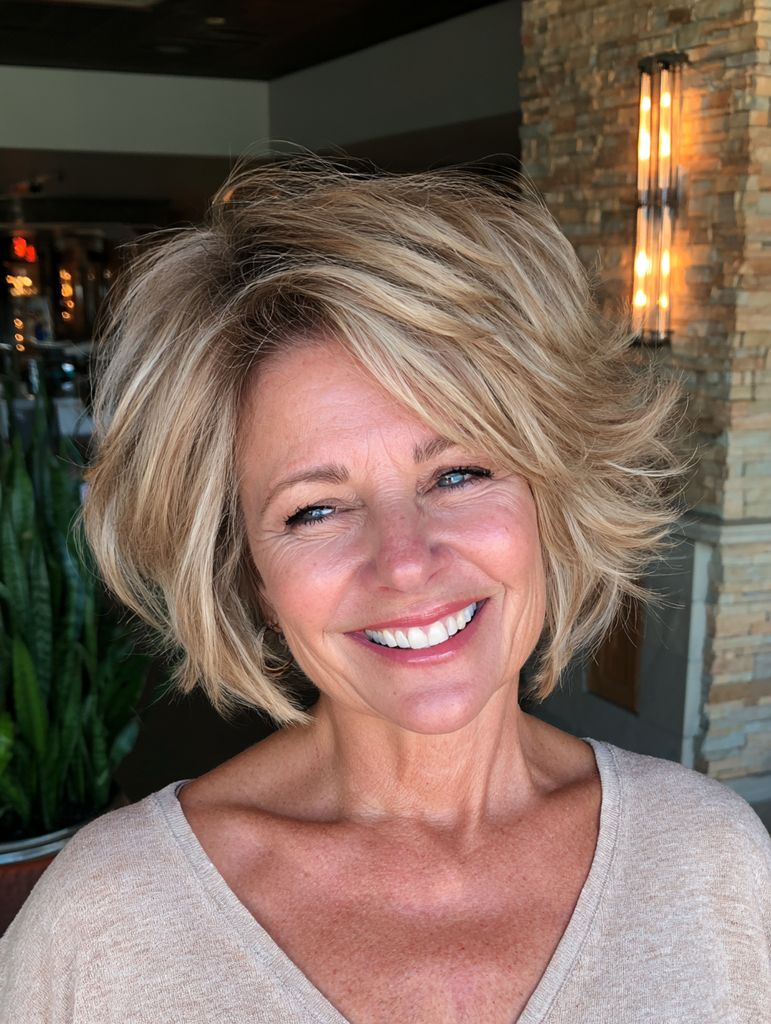
Apply lightweight root mousse and lift the crown while blow-drying. Keep the nape neat and direct the longer front pieces sideways or toward the cheekbones. Once dry, define several upper layers with minimal styling cream. The finished haircut should balance compact pixie structure with softer bob movement.
How to Style Stacked Bob Haircuts for Women Over 60
Begin by concentrating volume around the crown rather than teasing the entire haircut. Lightweight root mousse or volumizing spray can provide support, while a small round brush helps lift graduated back sections. Fine hair generally benefits from minimal product and restrained texturizing because excessive separation can reduce visual density.
For wavy and curly stacked bobs, work with natural texture using foam, curl cream, scrunching, and controlled diffusion. Smooth versions benefit from directional blow-drying that follows the haircut’s graduation. Regular trims are especially important because growth around the nape can quickly soften the stacked profile. Ask your stylist to adjust the graduation according to density so the crown gains lift without making the lower perimeter appear unnecessarily thin.
Final Thoughts
Stacked bob haircuts for women over 60 offer a practical combination of crown volume, manageable length, and adaptable styling. Rounded shapes, wispy bangs, silver feathered layers, waves, curls, tapered napes, and asymmetrical fronts can each create a distinctive interpretation of the classic graduated bob.
The most successful version should complement natural density, texture, facial proportions, and preferred maintenance level. Fine hair often needs subtle graduation, while thicker textures can support stronger layering. With thoughtful shaping and lightweight styling, a stacked bob can feel flattering, polished, dimensional, and beautifully contemporary after 60.
