
Short shag haircuts for curly hair bring together natural texture, strategic layering, and a playful sense of movement. Shorter crown layers encourage lift, while varied lengths through the sides and perimeter give curls room to form without becoming excessively heavy. Depending on curl pattern and density, the shape can feel softly rounded, dramatically tousled, or somewhere between a pixie and bob.
A successful curly shag should work with shrinkage rather than against it. Looser waves may support shorter layers, while tighter curls often need careful dry-length planning to maintain balance. These 19 short shag haircuts for curly hair explore fringe, volume, tapered shapes, bob-inspired silhouettes, and modern variations designed to celebrate natural movement.
The Layered Freedom That Keeps Curly Shags Looking Fresh
Curly shags continue to feel relevant because no two versions need to follow identical proportions. Layer placement can be adapted to curl pattern, density, desired crown volume, and the amount of length you want around the face or neckline.
Natural texture also gives the haircut an individual finish without demanding perfect daily styling. As curls shift between wash days, the shag can become softer, fuller, or more tousled while retaining its underlying shape. That adaptability gives the cut lasting appeal beyond a single trend cycle.
Rounded Curly Shag
A rounded curly shag distributes volume evenly through the crown and sides while shorter layers encourage visible bounce. Maintaining enough length through the lower perimeter keeps the silhouette balanced, preventing the upper texture from appearing disconnected or excessively wide.

Apply curl cream or lightweight foam to soaking-wet hair and encourage natural curl groups with gentle scrunching. Diffuse using controlled airflow, moving around the head for balanced volume. Once completely dry, lift selected roots with your fingertips. Avoid separating every curl because larger groups preserve definition and softness.
Curly Shag With Wispy Bangs
Wispy curly bangs introduce delicate movement across the forehead while shaggy crown layers create texture throughout the haircut. Keeping the fringe relatively light prevents it from overwhelming the face, while its irregular curl pattern connects naturally with the surrounding layers.

Apply lightweight curl foam to wet hair and shape the fringe according to its natural pattern. Diffuse gently without stretching the bangs downward. Once dry, arrange individual pieces with your fingertips and lift the crown slightly. Careful length planning is essential because curly fringe can shrink significantly.
Short Curly Wolf Shag
A curly wolf shag combines pronounced crown layering with softer, slightly longer pieces around the sides and neckline. The contrast produces lively movement without requiring extreme length differences, making the haircut expressive while remaining manageable for everyday styling.

Work curl cream through wet hair and scrunch the crown upward for additional elevation. Diffuse with controlled airflow and allow the lower pieces to fall naturally. Once completely dry, lift the upper roots and separate only selected curls. Keeping the perimeter softly defined prevents the wolf-inspired shape from becoming overly fragmented.
Curly Shaggy Bob
A shaggy bob combines the recognizable compact structure of a short bob with irregular curly layers that create movement throughout the crown and sides. Preserving some perimeter density keeps the haircut substantial while preventing natural curls from collecting excessive weight near the bottom.

Apply lightweight curl cream and scrunch damp hair gently before diffusing. Concentrate root lift around the crown while leaving the lower curls comparatively relaxed. Once dry, separate several larger curl groups for movement. Avoid overworking the perimeter because stronger ends help maintain the bob-inspired foundation beneath the shaggy texture.
Tapered Curly Shag
A tapered curly shag keeps additional texture through the crown while gradually reducing length toward the sides and nape. The controlled contrast gives curls a sculpted foundation while maintaining the irregular layering and natural movement associated with a shag.

Apply curl foam to wet hair and encourage definition through the longer upper sections. Diffuse carefully or air-dry completely before lifting the roots. Keep the tapered areas relatively neat and avoid adding excessive product there. The contrast between compact edges and fuller crown texture gives this haircut its distinctive shape.
Short Shag With Curly Curtain Bangs
Curly curtain bangs create an open frame across the forehead while blending gradually into the shorter facial layers of a shag. Their divided shape provides softer framing than full fringe, allowing natural curls to remain visible without heavily covering the forehead.

Style the bangs according to their natural curl direction while the hair remains wet. Apply lightweight foam, scrunch gently, and diffuse without repeatedly repositioning them. Once dry, arrange each side with your fingers. Keep the surrounding layers softly lifted so the fringe connects naturally with the overall shag.
Coily Short Shag
A coily short shag uses strategic layering to create dimension while preserving the strength and definition of tightly textured hair. Shorter crown sections encourage elevation, while carefully maintained perimeter length helps prevent the overall silhouette from becoming excessively rounded or sparse.

Apply moisturizing leave-in followed by lightweight defining cream while the hair is wet. Encourage natural coil groups and diffuse gently or air-dry completely. Once dry, lift the roots carefully with fingertips or a pick. Avoid separating the ends excessively because defined coil groups help preserve visual density throughout the layered shape.
Short Curly Shag With Micro Bangs
Micro bangs create a bold focal point above the eyebrows while short shag layers introduce irregular movement around the crown and sides. Natural curl texture softens the graphic fringe length, producing a distinctive hairstyle that feels playful rather than rigid.

Apply curl cream to wet hair and shape the short fringe without stretching it downward. Diffuse gently and allow shrinkage to determine the finished placement. Lift the crown after everything dries and separate only selected pieces. Keeping the bangs naturally textured helps them blend with the shag instead of appearing disconnected.
Side-Parted Curly Shag
A deep side part shifts additional curls toward one side, creating immediate root elevation and attractive asymmetry within a short shag. Varied layers prevent the heavier section from becoming bulky while maintaining enough fullness to showcase natural texture.

Establish the part while the hair remains wet and apply lightweight curl foam throughout. Diffuse gently, concentrating on root lift around the heavier side. Once completely dry, arrange the front curls with your fingertips. Tucking the lighter side behind the ear can emphasize the directional silhouette and highlight the layered texture.
Curly Pixie Shag
A curly pixie shag combines compact sides and neckline pieces with noticeably textured crown layers. The result sits between a traditional pixie and shag, providing short, manageable proportions while retaining enough upper length for expressive curl definition and movement.

Work lightweight curl cream through damp hair and scrunch the crown gently. Diffuse with controlled airflow while keeping the shorter sides relatively close to the head. Once dry, lift selected roots and define several upper curls. Avoid heavy waxes because flexible texture helps the haircut maintain its soft, shaggy character.
Short Shag With Loose Curls
Loose curls create broad movement through a short shag, allowing layered sections to fall with a relaxed, airy appearance. Shorter crown pieces provide elevation while slightly longer sides preserve enough weight to prevent the haircut from becoming overly fluffy or disconnected.

Apply lightweight mousse to damp hair and scrunch gently before diffusing or air-drying. Encourage larger curl groups rather than creating highly separated pieces. Once dry, lift the crown and loosen selected sections with your fingertips. A light texture mist can provide support without making the loose curls feel stiff.
Curly Shag With Bottleneck Bangs
Bottleneck bangs begin shorter through the center and gradually lengthen toward the cheekbones, creating a curved frame that blends naturally into shag layers. Curly texture makes the transition softer and more organic while adding dimension around the forehead.

Apply lightweight defining cream to the fringe and surrounding layers while wet. Encourage each section to follow its natural curl pattern rather than forcing symmetrical placement. Diffuse carefully and arrange the bangs only after they dry. Allowing for shrinkage is especially important when determining the shorter central fringe length.
Asymmetrical Curly Shag
An asymmetrical curly shag uses intentionally uneven lengths to create directional movement and a more unconventional silhouette. One side can remain slightly fuller or longer, while crown layering ties the contrasting proportions together through consistent natural texture.

Apply curl foam evenly and diffuse the hair according to its intended directional shape. Lift the crown gently while allowing the longer side to retain more visible length. Once dry, separate selected curls without disturbing the overall pattern. Avoid forcing perfect symmetry because intentional imbalance gives this haircut its distinctive personality.
Curly Shag With Face-Framing Layers
Face-framing layers bring shorter curls toward the cheekbones and jaw while preserving slightly more length through the back. Combined with shaggy crown movement, these sections create dimension around the face without requiring a full fringe or dramatically short perimeter.

Apply curl cream to wet hair and shape the front sections gently with your fingers. Diffuse while maintaining moderate root elevation and avoid stretching the facial curls downward. Once dry, arrange several pieces around the cheekbones. Keeping the back comparatively full creates balance against the shorter front layers.
Short Shag With Spiral Curls
Spiral curls gain lively movement from shag layers that allow individual ringlets to form at different heights. Maintaining enough density through the lower sections prevents the haircut from becoming too airy while still encouraging bounce through the crown.

Work lightweight defining cream through soaking-wet hair and encourage larger spiral groups with gentle scrunching. Diffuse without repeatedly touching the strands. Once completely dry, lift selected roots and separate only a few ringlets. Keeping most spirals intact creates a polished texture while showcasing the layered haircut.
Voluminous Curly Shag
A voluminous curly shag embraces noticeable fullness through the crown and sides while strategic layers prevent the silhouette from becoming shapeless. The result celebrates natural texture with an intentionally bold profile that still maintains enough structure around the perimeter.

Apply volumizing curl foam to wet hair and diffuse while gently lifting the roots. Move around the head evenly to encourage balanced fullness. Once completely dry, use your fingertips or a pick near the roots without disturbing the ends. Keep the outer curls defined so the increased volume remains controlled and intentional.
Short Curly Shag With Side Bangs
Curly side bangs introduce diagonal movement across the forehead while connecting naturally with short shag layers near the temples and cheekbones. The sweeping direction provides facial framing without the density or maintenance associated with a full curly fringe.

Establish the bang direction while the hair is wet and apply lightweight curl cream. Encourage the fringe to follow its natural pattern rather than brushing it smooth. Diffuse gently and allow the roots to cool in position. Once dry, arrange the front curls with your fingers and leave the remaining texture relatively untouched.
Tousled Short Curly Shag
A tousled curly shag emphasizes relaxed movement and slight irregularity instead of perfectly separated curl definition. Layered crown volume and softer perimeter pieces create an intentionally undone appearance while maintaining enough underlying structure to keep the haircut balanced.

Apply lightweight mousse and scrunch damp hair loosely rather than defining every curl. Diffuse with gentle airflow while occasionally shifting the roots. Once dry, shake the crown carefully and separate several larger sections. Avoid excessive manipulation because controlled imperfection creates the effortless character that makes this shag appealing.
Curly Shag With Extended Nape
A curly shag with an extended nape keeps the crown and sides relatively short while preserving slightly longer pieces through the neckline. This subtle length contrast introduces a modern mullet-inspired influence without overwhelming the haircut’s softer curly texture.
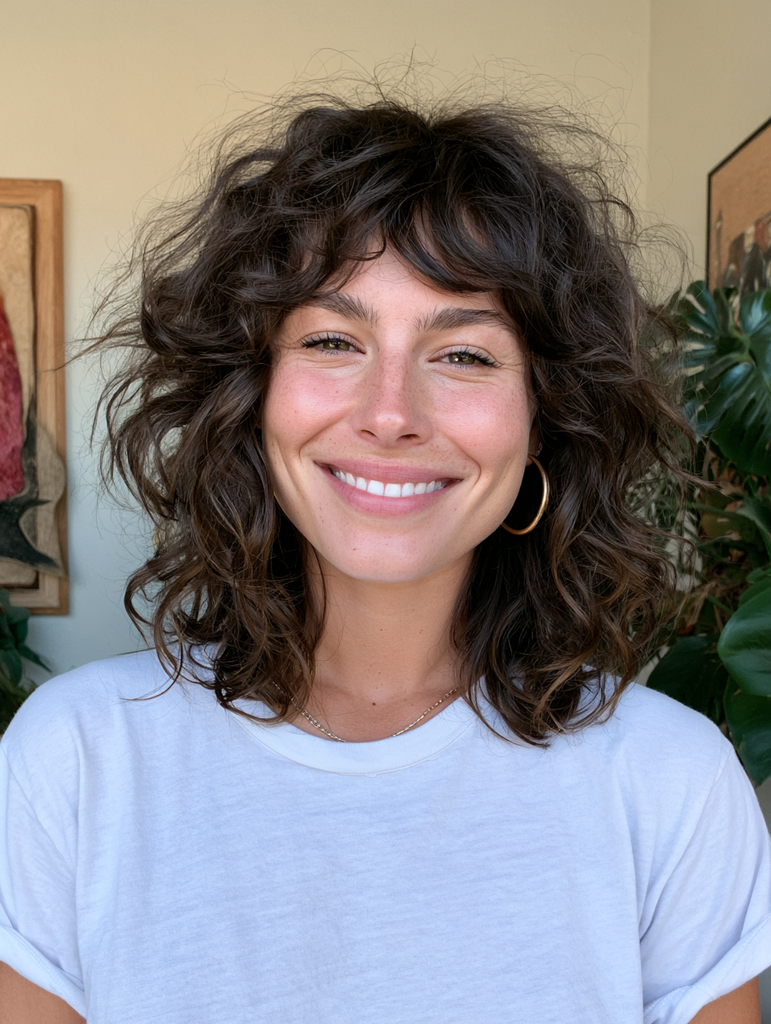
Apply curl foam throughout wet hair and encourage crown definition with gentle scrunching. Diffuse while allowing the neckline curls to retain their natural downward movement. Once dry, lift the upper roots and leave the nape comparatively relaxed. The contrast should remain visible but soft, creating movement without an excessively dramatic finish.
How to Style Short Shag Haircuts for Curly Hair
Start with sufficiently wet hair so curl cream, foam, or lightweight gel can distribute evenly and encourage natural curl grouping. Scrunch upward to support the shag’s crown layers, then diffuse using controlled airflow or allow the hair to air-dry without repeatedly touching it.
Once completely dry, concentrate additional volume at the roots rather than pulling apart every curl. A pick can help coily textures gain crown lift, while fingertips are often enough for looser curls. Avoid excessive thinning or aggressive texturizing because curly shags already gain movement from their layered structure. Fringe should always be planned with shrinkage in mind, especially for micro, wispy, or bottleneck bangs. Regular shaping helps maintain the intended balance between crown volume and perimeter length.
Final Thoughts
Short shag haircuts for curly hair offer an expressive way to combine natural texture with movement, volume, and personalized layering. Rounded shags, curly wolf cuts, pixie shags, coily shapes, curtain bangs, extended napes, and shaggy bobs provide distinctly different ways to explore the style.
The best version should respect your natural curl pattern, density, shrinkage, and preferred volume. Thoughtful layering can encourage bounce without sacrificing definition, while carefully designed fringe can transform facial framing. With gentle styling and appropriate moisture, a short curly shag can feel playful, dimensional, manageable, and beautifully individual.
