
Low maintenance haircuts for frizzy hair can make daily styling considerably simpler by working with natural texture instead of demanding constant straightening or heat styling. The right shape distributes volume, preserves enough weight to control expansion, and allows waves or curls to settle naturally. Long layers, textured lobs, rounded bobs, shags, and curl-conscious cuts can all provide attractive movement without requiring a perfectly smooth finish.
Frizz is not something a haircut can eliminate entirely, since humidity, moisture balance, porosity, damage, and natural texture all influence it. However, thoughtful layering can prevent unwanted bulk and create a silhouette where a little surface texture looks intentional. These 17 haircuts offer practical inspiration for straight, wavy, curly, thick, and naturally textured frizz-prone hair.
The Right Shape Can Make Frizz Much Easier to Work With
Low-maintenance haircuts generally preserve enough weight to keep frizz-prone strands from expanding unnecessarily. Excessive thinning, aggressive razor cutting, and numerous short layers can sometimes encourage additional surface texture, especially when hair is naturally coarse, wavy, or curly.
Instead, gradual layers and stronger perimeters can create controlled movement. The goal is not perfectly smooth hair every day but a haircut that maintains an attractive silhouette when air-dried, diffused, or styled with only a small amount of product.
Collarbone Cut With Long Layers
A collarbone cut provides enough length to give frizz-prone hair natural weight while long layers prevent the silhouette from becoming excessively heavy. Gradual transitions create movement without producing numerous short ends that can expand independently in humid conditions.

Apply leave-in conditioner or lightweight smoothing cream through damp lengths before air-drying. Encourage the front layers to fall naturally instead of repeatedly brushing them. If the texture is wavy, gentle scrunching can improve definition. The collarbone length also remains easy to secure in a ponytail on particularly humid days.
Textured Lob
A textured lob balances a substantial shoulder-skimming perimeter with controlled internal movement. Strategic shaping can reduce unwanted bulk while preserving enough density through the ends, allowing natural texture and moderate frizz to become part of the haircut’s relaxed appearance.

Apply lightweight leave-in product to damp hair and allow natural bends to develop. Wavy textures can be scrunched gently before air-drying or diffusing. Avoid separating every section once dry. Keeping larger groups intact helps maintain definition while the textured haircut prevents small imperfections from looking out of place.
Soft U-Shaped Long Cut
A U-shaped haircut creates a gentle curved perimeter through long hair, removing some heaviness from the outer corners without sacrificing substantial length. Long internal layers can provide additional movement while the remaining weight helps control excessive expansion.

Apply moisturizing leave-in conditioner through damp lengths and detangle carefully before drying. Allow natural texture to develop with minimal manipulation. The curved baseline already creates visible shape, reducing the need for extensive styling. Regular trims can also remove weathered ends that sometimes contribute to a rougher-looking surface.
Rounded Curly Bob
A rounded bob gives naturally curly, frizz-prone hair an intentional silhouette by distributing volume around the crown and sides. Curl-conscious layering allows texture to expand within a planned shape rather than collecting unnecessary weight near the bottom.

Apply curl cream or gel to soaking-wet hair and encourage natural curl groups through gentle scrunching. Diffuse using controlled airflow or air-dry completely before touching the curls again. Once dry, lift only selected roots. Maintaining defined curl groups helps surface frizz blend naturally into the rounded silhouette.
Shoulder-Length Cut With Minimal Layers
A shoulder-length haircut with restrained layering preserves enough weight to help control frizz while remaining easier to wash and dry than very long hair. The stronger perimeter also prevents the ends from becoming excessively feathered or visually scattered.

Apply smoothing leave-in product and allow the hair to air-dry whenever natural texture permits. For wavy strands, scrunch lightly rather than brushing during drying. A center or side part can change the appearance with virtually no additional effort. Minimal layering keeps everyday styling straightforward and predictable.
Long Shag for Wavy Frizzy Hair
A softer long shag can turn naturally irregular wave patterns and surface frizz into intentional texture. Longer crown layers provide movement without creating the extreme short pieces that may cause some frizz-prone textures to expand excessively.

Apply lightweight wave cream or mousse to damp hair and scrunch gently. Diffuse briefly or air-dry without repeatedly touching the strands. Once dry, lift selected crown roots rather than separating every wave. Keeping the shag relatively soft allows natural texture to provide much of the styling automatically.
Blunt Lob With Internal Layers
A blunt-looking lob maintains a strong exterior perimeter while subtle internal layers remove hidden bulk underneath. This combination works particularly well for dense, frizz-prone hair because the surface remains substantial while the interior gains easier movement.

Apply smoothing cream or leave-in conditioner before air-drying or blow-drying loosely. Avoid excessive surface texturizing, which can encourage shorter strands to lift independently. The internal shaping should allow the haircut to settle comfortably without requiring daily flat-ironing, while the strong baseline provides a naturally polished outline.
Curly Shag With Long Layers
A curly shag with longer layers distributes natural volume throughout the silhouette while giving curls enough room to form. Keeping the layering relatively gradual helps preserve density and prevents the haircut from becoming excessively fluffy around the crown.

Apply moisturizing curl cream to wet hair and encourage curl groups with gentle scrunching. Diffuse with low manipulation or air-dry completely. Avoid brushing once dry, since that can separate curls and increase visible frizz. Refresh later with water and a small amount of curl product where necessary.
Butterfly Cut for Thick Frizzy Hair
A butterfly cut introduces flowing face-framing pieces and long cascading layers while preserving substantial length through the back. On thick, frizz-prone hair, gradual layering can redistribute weight without creating an overly feathered or dramatically thinned perimeter.

Apply smoothing leave-in product through damp lengths and allow natural waves to form or blow-dry only the front sections when desired. Keeping the back layers long reduces everyday styling demands. The face-framing pieces can also be pinned back easily whenever humidity makes additional control desirable.
Wavy Clavicut
A clavicut finishes around the collarbone and works particularly well with natural waves because its moderate length provides enough weight to control excessive expansion. Subtle internal shaping can prevent dense hair from becoming bulky without disrupting the strong exterior outline.

Apply wave cream or lightweight leave-in conditioner and scrunch gently while damp. Air-dry or diffuse using controlled airflow. Once dry, avoid brushing through the texture. The collarbone length creates enough structure for natural bends and moderate frizz to appear relaxed rather than unfinished.
Long One-Length Cut
A predominantly one-length haircut uses the natural weight of longer hair to help keep frizz-prone strands controlled. With minimal layering, fewer short pieces sit around the surface, creating a stronger, smoother-looking outline that can work especially well for straight or loosely wavy textures.

Apply leave-in conditioner or smoothing cream through the mid-lengths and ends. Air-dry naturally or use gentle blow-drying when greater polish is desired. Regular trims help maintain the substantial baseline. Simple ponytails, braids, and buns also make this length exceptionally practical between wash days.
Soft Shaggy Bob
A soft shaggy bob allows slight frizz and natural movement to contribute to an intentionally relaxed finish. Unlike a heavily razored shag, this version preserves stronger ends while using controlled crown layering to create shape and prevent unnecessary heaviness.

Apply lightweight mousse or curl cream depending on texture and finger-style the hair while damp. Air-dry or diffuse gently, then leave most sections naturally grouped. Avoid attempting to smooth every flyaway. The softly tousled silhouette makes small variations in texture feel cohesive rather than problematic.
Curly Collarbone Cut
A collarbone-length curly cut provides enough space for curls to form while remaining manageable for washing, conditioning, and refreshing. Gradual layers can distribute volume without creating excessive crown expansion, making the overall silhouette easier to maintain.

Apply leave-in conditioner followed by curl cream or gel to wet hair. Encourage curl groups and dry with minimal touching. Once completely set, gently lift the roots where additional volume is desired. The medium length also allows quick ponytails or loose buns when a full curl refresh is inconvenient.
Rounded Lob With Face-Framing Layers
A rounded lob uses gentle internal shaping to create a balanced silhouette while longer face-framing pieces introduce movement around the cheekbones and jaw. Maintaining substantial weight through the lower perimeter helps control expansion and prevents the ends from appearing overly wispy.

Apply smoothing cream or wave product according to natural texture. Direct the front sections away from the face while damp and allow the remaining lengths to settle naturally. Keep styling simple and avoid repeatedly manipulating the surface. The rounded structure provides shape even when some natural frizz remains visible.
Long Wavy Layers
Long layers allow wavy, frizz-prone hair to move without removing the weight that helps control unwanted expansion. Gradual layering can release heavy sections while maintaining a substantial perimeter, creating a flowing silhouette that works particularly well when air-dried.

Apply lightweight leave-in conditioner and wave cream to damp hair, then scrunch gently. Allow the hair to dry without repeatedly touching or brushing it. Once dry, arrange the front pieces with your fingertips. Longer layers make natural variation in the wave pattern feel intentionally soft and dimensional.
Curly Wolf Cut With Soft Layers
A softened wolf cut combines crown movement with longer sections through the sides and back. Keeping the length differences gradual makes the haircut more manageable for frizz-prone curls while still providing the recognizable lifted, textured silhouette.

Apply moisturizing curl cream to soaking-wet hair and scrunch the crown gently. Diffuse or air-dry without disturbing developing curl groups. Once completely dry, lift selected roots for shape. Avoid excessive separation through the ends. Softer transitions help the haircut maintain definition even when humidity increases surface texture.
Medium-Length Cut With Invisible Layers
Invisible layers remove selected weight beneath the surface while maintaining a smoother, more substantial exterior. This technique can be particularly useful for thick, frizz-prone hair that needs reduced bulk but tends to become fluffy when conventional layers are excessively short.
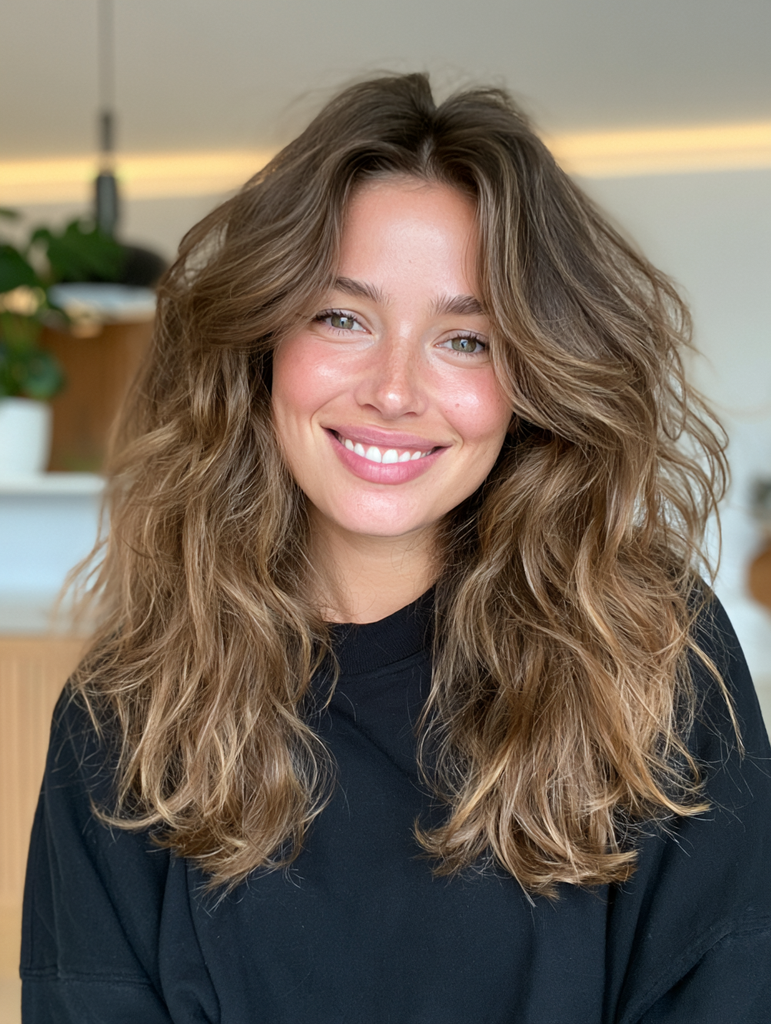
Apply leave-in conditioner or lightweight smoothing cream and allow the hair to follow its natural pattern. The hidden layering should create movement without demanding detailed styling. When greater polish is desired, concentrate blow-drying around the surface and front sections instead of repeatedly heat-styling the entire haircut.
How to Keep Frizzy Hair Manageable With Less Daily Styling
Choose a haircut that looks good with your natural texture rather than one that depends on daily straightening. Longer layers, strong perimeters, and strategic internal shaping generally provide easier grow-out than excessive thinning. If your hair expands significantly when shortened, discuss shrinkage and natural drying patterns before committing to numerous short layers.
Styling technique matters just as much as the haircut. Apply leave-in or defining products while hair is still damp, minimize unnecessary touching during drying, and avoid brushing naturally curly hair once it has set. A microfiber towel or soft cotton T-shirt can reduce rough handling after washing. Heat protection remains important whenever blow-dryers or hot tools are used.
Final Thoughts
Low maintenance haircuts for frizzy hair should make natural texture easier to enjoy rather than creating a constant battle for perfectly smooth strands. Collarbone cuts, long layers, textured lobs, rounded curly bobs, soft shags, and invisible layering can provide structure while allowing natural movement to remain visible.
Consider density, curl or wave pattern, shrinkage, humidity response, and preferred styling time before choosing your cut. Preserving enough weight can help control expansion, while strategic layering prevents excessive bulk. With moisture-conscious care and a shape designed around your natural texture, frizz-prone hair can look dimensional, relaxed, polished, and intentionally beautiful.
