
Low maintenance haircuts for thick hair work best when the shape manages natural density instead of relying on constant heat styling. Strategic internal layers, carefully shaped ends, and well-planned lengths can remove unnecessary bulk while preserving the richness that makes thick hair beautiful. From textured bobs and collarbone cuts to long layers, pixies, and naturally wavy styles, the right haircut can make everyday routines noticeably simpler.
The goal is not to thin thick hair indiscriminately. Excessive texturizing can create frizz, unwanted expansion, or difficult grow-out. Instead, weight should be removed where it improves movement while enough density remains around the perimeter for balance. These 17 haircuts offer practical inspiration for thick straight, wavy, curly, short, medium, and long hair.
The Secret to Making Thick Hair Easier to Manage
A low-maintenance cut should cooperate with natural growth patterns, texture, and density. Internal layers can reduce hidden weight without leaving the surface overly feathered, while thoughtful perimeter shaping helps thick hair fall into place with less effort.
Length also matters. Extremely awkward in-between lengths can cause dense hair to expand around the sides, while carefully selected short, collarbone, or longer shapes distribute weight more effectively. The best haircut should still look intentional when air-dried or styled with minimal manipulation.
Collarbone Cut With Invisible Layers
A collarbone cut provides enough length to weigh thick hair down slightly while invisible internal layers remove excess density underneath. The surface remains smooth and substantial, creating movement without the obviously feathered appearance associated with heavily layered haircuts.

Apply lightweight smoothing cream to damp hair and air-dry or blow-dry loosely according to natural texture. Direct the front sections away from the face for subtle movement. Because the internal layers do most of the weight management, extensive daily styling is unnecessary. A small amount of serum can control the ends.
Textured Lob
A textured lob combines a strong shoulder-skimming perimeter with carefully placed internal movement. Removing strategic bulk prevents thick hair from forming a heavy triangular silhouette, while the medium length remains practical enough for ponytails and quick half-up styles.

Apply lightweight styling cream and allow natural texture to develop or create several broad bends when desired. Avoid defining every section individually. A slightly imperfect finish complements the haircut’s relaxed structure. Regular perimeter trims keep the lob looking intentional while internal shaping helps maintain comfortable movement between appointments.
Long Layers With Face Framing
Long layers distribute thick hair’s weight without sacrificing overall length, while shorter face-framing pieces provide movement around the cheekbones and jaw. Keeping the layer transitions gradual prevents the ends from becoming overly thin or difficult to manage.

Air-dry with smoothing cream or blow-dry the front pieces away from the face using a large round brush. The remaining lengths can stay relatively natural. Avoid adding numerous short crown layers if your hair tends to expand. Longer transitions allow the haircut to settle naturally while maintaining substantial, healthy-looking ends.
Blunt Bob With Internal Layers
A blunt bob provides a strong, polished perimeter while hidden internal layers remove some of the density that can make thick short hair feel bulky. The combination preserves the appearance of substantial ends without leaving unnecessary weight throughout the interior.

Apply smoothing cream and blow-dry loosely or allow straighter textures to air-dry naturally. Keep the perimeter relatively clean rather than heavily curled. Internal shaping should allow the bob to sit comfortably without constant flat-ironing. A subtle side or center part can change the appearance without requiring additional styling.
Soft U-Shaped Long Cut
A U-shaped perimeter creates a gentle curve through long thick hair, removing some heaviness from the corners while preserving substantial length through the center back. Long internal layers can add further movement without producing excessively feathered ends.

Apply leave-in conditioner or lightweight smoothing cream and allow the hair to dry according to its natural pattern. Broad waves can be added occasionally, but the rounded perimeter already provides visual shape. Regular trims help prevent the lower lengths from becoming excessively heavy while maintaining the soft U-shaped outline.
Shoulder-Length Cut With Long Layers
Shoulder-length hair offers enough weight to control thick strands while remaining considerably easier to wash, dry, and style than very long hair. Long layers introduce movement without encouraging the excessive side volume that shorter, disconnected layers sometimes create.

Apply lightweight smoothing product through damp lengths and blow-dry loosely or air-dry. Tuck the front sections behind the ears or create a simple center part for an effortless finish. Keeping layers relatively long allows the haircut to settle naturally, reducing the need for detailed daily styling.
Tapered Pixie for Thick Hair
A tapered pixie removes considerable bulk around the sides and neckline while retaining enough crown length for softness and styling flexibility. Strategic weight removal prevents thick short hair from becoming overly rounded, giving the compact silhouette a cleaner, more manageable shape.

Apply a small amount of lightweight styling cream and finger-dry the crown according to its natural direction. Keep the tapered areas relatively product-free. The longer top can remain tousled, swept sideways, or softly lifted. Regular trims maintain the proportions, but everyday styling can remain refreshingly minimal.
Layered Bixie Cut
A bixie sits between a pixie and bob, making it useful for thick hair that needs reduced weight without becoming extremely short. Internal layering creates movement through the crown, while slightly longer pieces around the ears and face maintain softness.

Work lightweight styling foam through damp hair and finger-dry according to natural texture. Define only several upper pieces rather than styling every layer. The haircut’s built-in movement should provide most of the shape. Keeping the neckline controlled helps balance the fuller crown and side sections.
Wavy Shag With Long Layers
A softly layered shag can work beautifully for thick wavy hair because its structure encourages natural bends while removing strategic bulk. Keeping the crown layers longer than an extreme shag helps control expansion and makes the haircut easier to air-dry.

Apply wave foam or lightweight curl cream and scrunch damp hair gently. Diffuse briefly or allow it to air-dry completely. Once dry, lift selected roots without separating every wave. Long shag layers give thick texture room to move while avoiding the excessive maintenance associated with highly disconnected sections.
Rounded Bob for Thick Hair
A rounded bob uses controlled internal layering to create a smooth curved silhouette without allowing dense hair to become excessively wide. The perimeter remains substantial, while hidden weight removal helps the sides sit closer and move more naturally.

Apply smoothing cream and blow-dry with a medium round brush or allow naturally straight hair to air-dry before refining the ends. Avoid adding excessive root volume around the sides. The haircut’s curved structure provides built-in polish, reducing the amount of styling required for an intentional finish.
Long One-Length Cut With Subtle Internal Shaping
A predominantly one-length haircut allows thick hair’s natural weight to create a smooth, substantial silhouette. Subtle internal shaping removes selected density underneath without disrupting the strong exterior perimeter, making the style particularly practical for straight or slightly wavy textures.

Apply leave-in conditioner or smoothing cream and allow the hair to dry naturally whenever possible. Because the outer lengths remain relatively uniform, the haircut requires little detailed styling. A center part, side part, ponytail, or simple bun can easily change the look between wash days.
Curly Shoulder-Length Cut
A shoulder-length cut gives thick curly hair enough room to form while preventing excessive length from becoming difficult to manage. Carefully positioned layers distribute volume around the crown and sides, helping the curls maintain balance rather than collecting weight near the bottom.

Apply curl cream to soaking-wet hair and encourage natural curl groups through gentle scrunching. Diffuse with controlled airflow or air-dry completely. Once dry, lift only the roots where additional volume is desired. A curl-conscious shape minimizes the need to repeatedly manipulate or restyle the texture.
French Bob for Thick Hair
A French bob creates a compact jaw-level silhouette that can feel surprisingly manageable when internal density is carefully removed. Maintaining a strong perimeter preserves the haircut’s recognizable shape, while subtle weight reduction prevents thick hair from becoming overly triangular.

Apply lightweight smoothing cream or wave foam depending on texture. Air-dry for a relaxed finish or blow-dry loosely for greater polish. Avoid excessive curling or straightening; the compact perimeter should provide most of the structure. Light fringe can be added when additional facial framing is desired.
Butterfly Cut With Long Layers
A butterfly cut uses flowing face-framing sections and long cascading layers to give thick hair movement without sacrificing substantial length. Keeping the shorter pieces concentrated around the front reduces bulk while allowing the back to remain full and versatile.

Blow-dry the front sections away from the face when you want a polished finish, or allow natural waves to create softer movement. Lightweight smoothing cream can control excess frizz. Because the layers remain relatively long, the haircut can also transition easily into ponytails, braids, and buns.
Soft Shaggy Bob
A soft shaggy bob introduces enough crown layering to create movement while maintaining stronger ends than a traditional heavily razored shag. This balance makes the haircut practical for thick hair because internal weight is reduced without creating excessively fluffy or fragmented texture.

Apply lightweight mousse or smoothing cream and finger-dry according to natural texture. Encourage movement around the crown but avoid deliberately expanding the sides. Once dry, define only selected layers. The slightly undone finish means the haircut does not require a precise blowout to look intentional.
Thick-Hair Clavicut
A clavicut finishes around the collarbone, providing a useful balance between the manageability of shorter hair and the weight control of longer lengths. Subtle internal layers can reduce density while maintaining a clean, substantial exterior shape.

Apply lightweight leave-in or smoothing cream and air-dry whenever natural texture allows. For a polished finish, blow-dry only the front and upper sections while leaving the lower lengths relaxed. The collarbone length remains easy to tie back, making it particularly practical for busy everyday routines.
Long Curly Layers
Long curly layers help distribute thick curl volume throughout the silhouette instead of allowing excessive weight to accumulate near the ends. Gradual layering preserves density while giving individual curl groups enough space to form naturally and move freely.
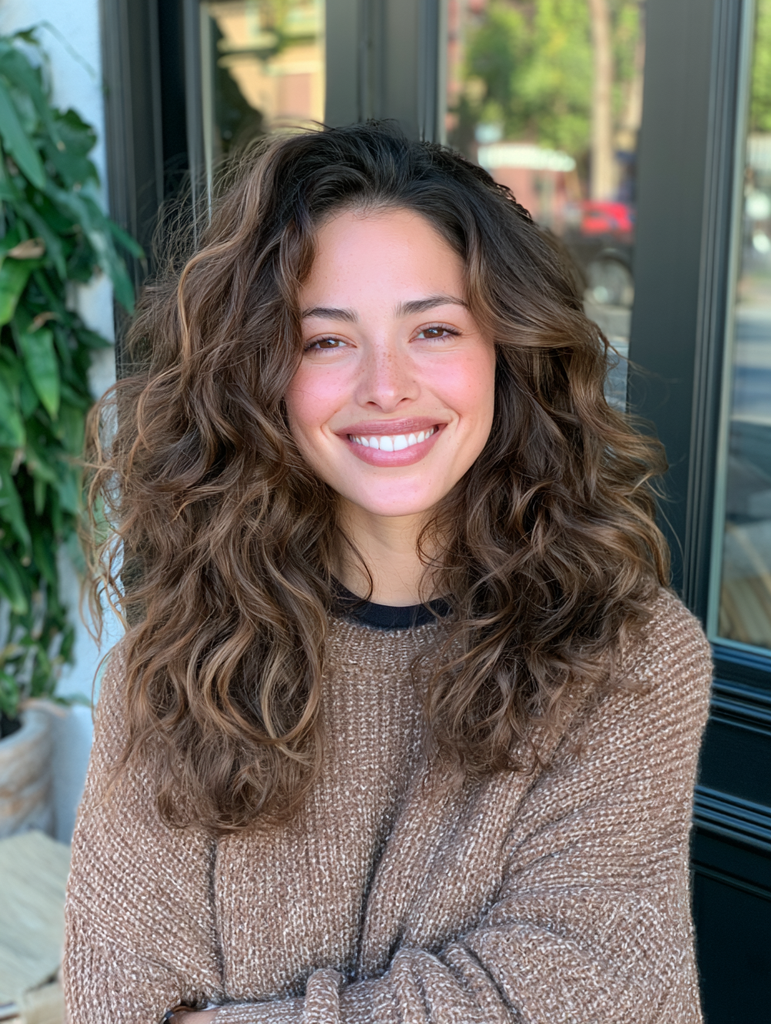
Apply moisturizing curl cream or gel to wet hair and encourage natural curl groups without over-manipulating them. Air-dry or diffuse gently until completely set. Once dry, lift selected roots if needed. A well-planned layered structure should allow the curls to maintain shape for multiple days with relatively simple refreshing.
How to Make Thick Hair Easier to Maintain
Ask for strategic weight removal rather than indiscriminate thinning. Internal layers can reduce density underneath while preserving a smooth exterior, whereas excessive razor cutting or thinning can sometimes encourage frizz and make grow-out harder to control. The exact technique should always account for whether the hair is straight, wavy, curly, or coily.
Choose a length that supports your routine. Collarbone and shoulder-length cuts offer easy tie-back options, while tapered pixies reduce drying time considerably. Longer layers work well when natural weight helps control expansion. Styling products should provide moisture and control without creating buildup. Whenever possible, select a haircut that looks intentional with your natural air-dried texture rather than one that depends on daily heat styling.
Final Thoughts
Low maintenance haircuts for thick hair should reduce unnecessary bulk while preserving the density that gives thick strands their beautiful presence. Collarbone cuts, textured lobs, tapered pixies, rounded bobs, long layers, butterfly cuts, and curl-conscious shapes all offer practical ways to achieve that balance.
The strongest option depends on natural texture, preferred length, and how much styling time you want to spend each day. Thoughtful internal shaping can make thick hair move more freely without leaving the ends sparse. With the right proportions, thick hair can feel lighter, easier to manage, versatile, and naturally polished.
